Single-vendor vs multi-vendor BTL campaign management: 2026 decision framework
2 min read

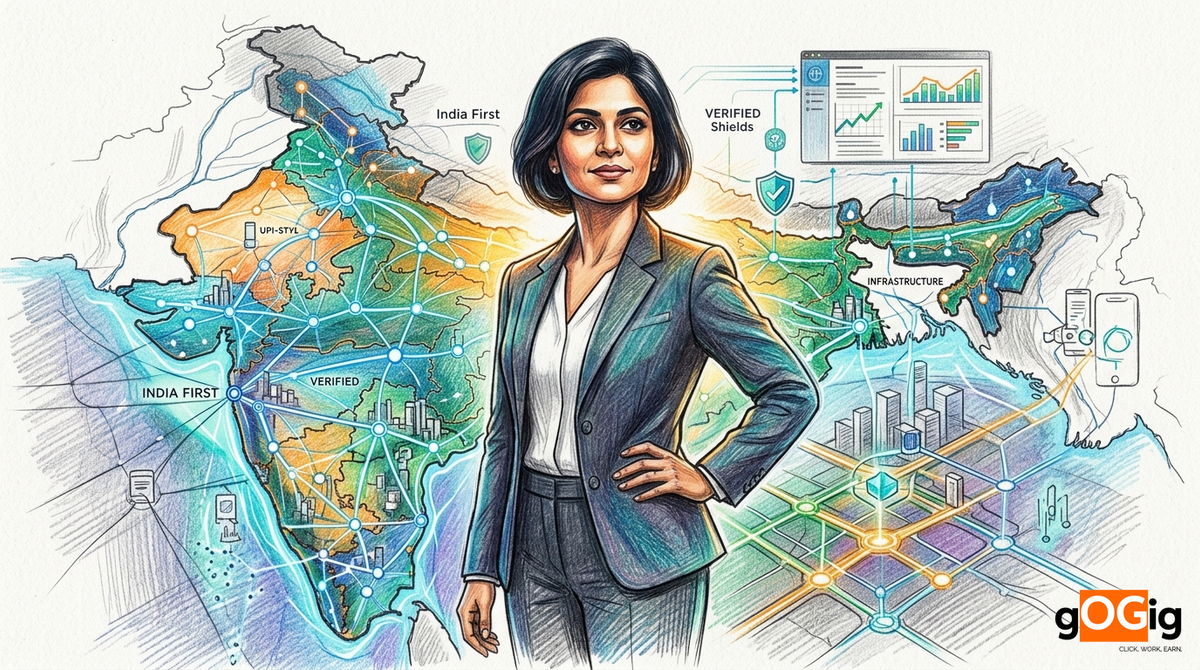
An investor-grade thesis on why the verification infrastructure for physical marketing will emerge in India before the US, Europe, or any other major economy. Built around the same structural logic that produced UPI, Aadhaar, and ONDC. Distributed for press, investors, and strategy leaders.
India first
The market thesis. Field Execution Intelligence will emerge as a category in India before any other major economy. The combination of scale, complexity, mobile infrastructure, and regulatory tailwind is unique to India in 2026.
India built UPI before America built Zelle at comparable scale. India built Aadhaar before any G20 country had a unified digital identity. India built ONDC before any country attempted open commerce protocols. The next layer is now visible. Marketing accountability becomes the fourth pillar of India's digital infrastructure thesis, and Field Execution Intelligence becomes its category name.
India is the only major economy in 2026 with the combination of scale, complexity, mobile penetration, and regulatory pressure to make Field Execution Intelligence both necessary and feasible. Every other country lacks at least one of these four conditions.
| Country | Physical retail outlets | Mobile / WhatsApp penetration | BTL spend | FEI readiness |
|---|---|---|---|---|
| India | 13 million | 750M smartphones, 500M+ WhatsApp users | ₹80,000 Cr | High (all conditions present) |
| USA | 1.05 million | 315M smartphones | $110B+ (mostly modern trade) | Low (no fragmentation problem) |
| China | 5 to 7 million | 1.1B smartphones (no WhatsApp) | $95B+ (digital-first execution) | Medium (different stack) |
| Brazil | 1.2 million | 190M smartphones | $13B | Medium-low (smaller scale) |
| Indonesia | 3.6 million | 190M smartphones | $8B | Medium (similar conditions, smaller scale) |
| Nigeria | 2.4 million | 130M smartphones | $2B | Medium (early stage) |
| UK | 0.29 million | 60M smartphones | $8B | Low (mature, modern trade dominant) |
| Japan | 0.55 million | 95M smartphones | $5B | Low (high compliance baseline) |
| Germany | 0.41 million | 70M smartphones | $6B | Low (institutional verification mature) |
| Country | Missing condition |
|---|---|
| USA | Retail consolidated under modern trade chains. Verification handled by retailer integrations, not field force. |
| China | WeChat ecosystem makes verification a platform feature, not an infrastructure category. |
| UK, Germany, Japan | Retail concentrated, BTL economy small relative to digital. Insufficient complexity to drive category creation. |
| Brazil, Indonesia | All conditions present, but scale 4 to 6 times smaller. India creates the category first; emerging markets adopt. |
| Africa | Conditions present, infrastructure underdeveloped. India exports the category 4 to 6 years later. |
| Middle East | Retail modern, BTL small. Verification follows digital-first patterns. |
Aadhaar (identity layer)
1.44 billion biometric IDs issued. Powered KYC at scale, replaced paper-based identity verification. 1,470 Cr e-KYC transactions by March 2023.
Jan Dhan (financial inclusion layer)
54+ Cr bank accounts opened. Connected unbanked Indians to formal financial system, enabled DBT at scale.
UPI (payments layer)
49% of global real-time payment transactions in 2024. 81% of India's retail payments by volume. Now live in 11 countries.
GSTN (taxation infrastructure)
Indirect tax verification, vendor compliance, invoice matching across millions of businesses.
FASTag (mobility verification)
9+ Cr active tags, toll collection digitised. Vehicle-level verification at infrastructure scale.
ONDC (commerce protocol)
Open commerce network, vendor-buyer interoperability. The protocol layer for offline and online commerce.
DEPA + Account Aggregator (data layer)
Consent-based data sharing across financial institutions. The trust layer for personal data flows.
Field Execution Intelligence (verification layer)
The emerging category. Verification infrastructure for physical marketing, field operations, and BTL spend. The next layer of India's accountability stack.
| DPI layer | Economic impact | Source |
|---|---|---|
| UPI alone | 3.4% of India's annual GDP | Journal of Emerging Investigators (2025) |
| Aadhaar | 2.5 to 4.3% of annual GDP | Same study |
| DPI total by 2030 | 2.9 to 4.2% of GDP (estimate) | ORF, January 2026 |
| Digital economy share of GDP | 11.74% (2022-23), projected 20% by 2029-30 | Ministry of Electronics and IT |
| FEI projected impact (FY 2030-31) | 0.15 to 0.25% of GDP | gOGig Labs estimate |
Retail fragmentation at unprecedented scale
13 million retail outlets vs 1 million in the US. The fragmentation that makes verification difficult is also what makes the category valuable.
Mobile-first field workforce
3 million FMCG field reps, 750M+ smartphones, 500M+ WhatsApp users. WhatsApp Business API makes verification native, not bolted on.
Physical economy still growing 12 to 14% YoY
OOH alone projected to grow from ₹3,500 Cr (2023) to ₹7,000 Cr (2026). BTL grows faster than digital in many categories.
Tier-2 and Tier-3 BTL expansion
Premiumisation now driven from tier-2 cities, not metros. Verification gaps widen with geographic spread.
Regulatory tailwind: BRSR Core
SEBI mandatory limited assurance from FY 2025-26 (top 250). Top 1,000 by FY 2027-28. Listed companies face value chain substantiation pressure.
CFO maturity rising
Indian CFOs trained on digital marketing accountability since 2014. Now applying the same standard to physical marketing.
AI inference costs collapsing
Image recognition and anomaly detection costs down 90%+ in 5 years. Real-time verification becomes economically feasible at India's scale.
Procurement governance maturing
Indian enterprises adopting 3-way matching across categories. BTL is the last exception. The standardisation pressure is structural.
| Market segment | Size | Definition |
|---|---|---|
| Total addressable market (TAM) | ₹80,000 Cr | India's physical marketing economy. BTL, OOH, field force, trade activation |
| Serviceable addressable market (SAM) | ₹15,000 to 22,000 Cr | Accountability layer. Verification, audit, procurement compliance |
| Serviceable obtainable market (SOM, 5-year) | ₹2,500 to 4,000 Cr | FEI platform revenue capturable by 2030 at 12 to 18% category penetration |
| SOM (10-year) | ₹6,000 to 9,000 Cr | FEI platform revenue at 35 to 45% category penetration by 2035 |
| Cross-border export opportunity | $8 to 15B | SEA, MEA, Latin America FEI adoption following India's category creation |
| Adjacent category | Global market size | Relevance to FEI |
|---|---|---|
| Retail Execution Software | $304M (2024) | Closest adjacent. FEI is broader scope |
| Field Service Management | $5.49B | Workforce verification overlap |
| Field Sales Software | $2.8B | Sales rep workflow overlap |
| EHS and Audit Software | $3.1B | Audit trail and compliance overlap |
| Ad Fraud Detection | $1.5B (2024), $5B (2033 projected) | Fraud detection model parallel |
| OOH Verification Tech | $0.8B | OOH-specific subset of FEI |
| Combined adjacent TAM | $13.9B+ | FEI category sits at intersection |
| Converging factor | 2020 status | 2026 status |
|---|---|---|
| WhatsApp Business API maturity | Limited rollout | 500M+ Indian users, business workflows mainstream |
| AI inference cost per image | ₹0.50 to 1.20 | ₹0.03 to 0.05 |
| Smartphone penetration in field workforce | 55% | 88% |
| BRSR Core regulatory force | Voluntary disclosure | Mandatory for top 250 listed |
| CFO awareness of marketing accountability gap | Low | Rising fast (CFO India 2026 conferences flagged it) |
| Procurement governance standardisation | Inconsistent | 3-way matching default across categories |
| Enterprise willingness to pay for verification | Low | 4 to 8x ROI demonstrated, demand established |
| Competitive vendor pool | None at FEI scope | Early entrants, category formation underway |
Read the full market thesis.
Download the 32-page investor one-pager. India FEI category framing, TAM SAM SOM math, comparable adjacent exits, regulatory clock, and 5-year revenue trajectory. Built for Series A and Series B investors.
Download the market thesis →| WhatsApp characteristic | Significance for FEI |
|---|---|
| 500M+ active Indian users | Highest single-app workforce reach globally |
| WhatsApp Business API adoption | Native verification ingestion at scale |
| Multi-language support (8 Indian languages) | Field workforce accessibility across geographies |
| Cultural default communication channel | Zero adoption friction for vendors |
| WhatsApp metadata stripping behaviour | The very gap that creates verification need |
| Cross-platform reach (Android dominant) | Field workforce smartphone overlap |
| API extensibility | Platforms build on top, not against |
| India-specific deep integration | WhatsApp Pay, Business Messaging India-tested |
| Country | Dominant workforce messaging | FEI feasibility |
|---|---|---|
| India | WhatsApp (500M+ users) | Very high (single ecosystem) |
| USA | SMS, iMessage, fragmented | Low (no single channel) |
| China | WeChat (locked ecosystem) | Medium (platform-controlled) |
| Brazil | WhatsApp dominant | Medium-high (smaller scale) |
| UK, Europe | Mixed. SMS still significant | Low |
| Japan | LINE dominant | Low (different ecosystem) |
| Indonesia | WhatsApp dominant | Medium (similar conditions) |
| Africa | WhatsApp + SMS hybrid | Medium-high (developing) |
| Complexity dimension | India | USA | Europe |
|---|---|---|---|
| Retail outlets | 13M | 1.05M | 3.2M (combined) |
| Languages in field workforce | 22+ | 2 to 3 | 15 to 20 (segmented) |
| Tier-1 vs Tier-3 vs rural spread | 4 distinct tiers | 2 tiers | 2 to 3 tiers |
| Vendor fragmentation per brand | 10 to 25 vendors typical | 2 to 5 vendors | 3 to 7 vendors |
| Manual reporting share of total | 70 to 85% | 15 to 25% | 20 to 30% |
| Smartphone-only field workforce | 88% | 95% but PC integration heavy | 92% |
| WhatsApp as workflow tool | 80%+ | 5% | 15% |
| Verification gap as % of BTL | 20 to 30% | 5 to 10% | 4 to 8% |
| Mechanism | Effect |
|---|---|
| High complexity equals high pain | Brands willing to pay for verification |
| High pain equals high willingness to adopt | Adoption curve steeper |
| Steep adoption curve equals faster category formation | India reaches scale before other markets |
| Faster scale equals vocabulary anchors first in India | India sets the category definition |
| Category definition locked equals export potential | Other markets adopt Indian vocabulary |
| Export potential equals global market opportunity | Indian players capture cross-border revenue |
| Fiscal year | Scope expansion | FEI demand impact |
|---|---|---|
| FY 2023-24 | BRSR voluntary, top 1,000 | Awareness only |
| FY 2024-25 | BRSR Core voluntary, top 150 | Pilot adoption |
| FY 2025-26 | BRSR Core mandatory, top 250 (limited assurance) | Active demand inflection |
| FY 2026-27 | BRSR Core mandatory, top 500 | Adoption acceleration |
| FY 2027-28 | BRSR Core mandatory, top 1,000 | Category becomes default |
| FY 2028-29 | Reasonable assurance phase begins | Audit-grade verification mandatory |
| Year | BTL spend under BRSR scrutiny | Cumulative listed entities |
|---|---|---|
| FY 2025-26 | ₹14,700 to 22,100 Cr | 250 |
| FY 2026-27 | ₹22,000 to 31,000 Cr | 500 |
| FY 2027-28 | ₹32,000 to 44,000 Cr | 1,000 |
| FY 2028-29 | ₹40,000 to 52,000 Cr | 1,500+ (private adoption follows) |
| Year | Category revenue (India) | Penetration of SAM |
|---|---|---|
| FY 2024-25 | ₹50 to 100 Cr | 0.3 to 0.6% |
| FY 2025-26 | ₹200 to 350 Cr | 1.3 to 2.0% |
| FY 2026-27 | ₹600 to 900 Cr | 3.5 to 5.0% |
| FY 2027-28 | ₹1,200 to 1,800 Cr | 7 to 10% |
| FY 2028-29 | ₹2,000 to 2,800 Cr | 12 to 16% |
| FY 2029-30 | ₹2,800 to 4,000 Cr | 17 to 22% |
| FY 2030-31 | ₹3,500 to 5,000 Cr | 20 to 28% |
| Market position | Typical revenue share | Projected FY 2030-31 revenue (if category leader) |
|---|---|---|
| Category creator + leader | 30 to 40% | ₹1,100 to 2,000 Cr ARR |
| Fast-follower #2 | 15 to 25% | ₹525 to 1,250 Cr ARR |
| Specialist #3 | 8 to 12% | ₹280 to 600 Cr ARR |
| Combined long tail | 25 to 35% | ₹875 to 1,750 Cr ARR |
| Geography | FEI adoption timing | Driver |
|---|---|---|
| India | 2024 to 2026 (category creation) | BRSR Core, CFO maturity, complexity |
| Southeast Asia (Indonesia, Philippines) | 2027 to 2029 | Similar fragmented retail, mobile-first |
| Middle East and Africa | 2028 to 2030 | Multinational brand demand, ESG regulation |
| Latin America (Brazil, Mexico) | 2028 to 2030 | Similar retail fragmentation, BRSR-equivalent regulation |
| Eastern Europe | 2029 to 2031 | EU sustainability reporting expansion |
| Sub-Saharan Africa | 2030 to 2032 | Infrastructure follow-on adoption |
| USA, Western Europe, Japan | Limited adoption | Modern retail consolidation reduces fragmentation need |
| UPI export year | Country | Adoption pattern |
|---|---|---|
| 2023 | Singapore | NRI corridor, full bilateral |
| 2023 | UAE | NRI corridor + retail |
| 2024 | France | Tourism + remittance |
| 2024 | Sri Lanka, Mauritius, Bhutan, Nepal | Bilateral pilots |
| 2025 | Oman, Qatar, Malaysia | Migration corridor |
| 2026 | Israel | Latest addition |
| Target 2029 | 20 countries | Government roadmap |
| Comparable category | Early-stage valuation | Exit or peak valuation | Multiplier |
|---|---|---|---|
| SafetyCulture (frontline operations) | $300M (early) | $2.7B (2022) | 9x |
| Gong (revenue intelligence) | $500M (early) | $7.25B (2021) | 14x |
| Outreach (sales execution) | $400M (Series D) | $4.4B (Series G) | 11x |
| Datadog (observability) | $650M (pre-IPO) | $40B+ (current) | 60x |
| Repsly (retail execution) | $50M (early) | $200M+ (2024) | 4x |
| Trax Image Recognition | $1.1B (2019) | $2.5B (2023) | 2.3x |
| iAuditor / SafetyCulture (verification) | $300M | $2.7B | 9x |
| Verkada (visual verification) | $200M | $3.2B | 16x |
| Indian category creator | Peak valuation | Category created |
|---|---|---|
| Razorpay | $7.5B (peak) | Financial infrastructure for internet businesses |
| Zoho | $1B+ private | Operating system for business |
| Postman | $5.6B (2021) | API platform |
| BrowserStack | $4B (2022) | Software testing infrastructure |
| Freshworks | $10B (peak post-IPO) | Customer experience suite |
| Chargebee | $3.5B | Revenue growth management |
| Darwinbox | $1B (2023) | Workforce experience platform |
| Indian category | Domestic adoption | Global export |
|---|---|---|
| Aadhaar (2009) | 1.44 billion IDs | 11 countries adopting biometric models |
| UPI (2016) | 49% of global RTP transactions | 11 countries live |
| ONDC (2022) | Cross-platform commerce | Open protocol model studied globally |
| DEPA (2024) | Consent-based data sharing | OECD reference architecture |
| FEI (2025 onwards) | BTL accountability infrastructure | SEA, MEA, LatAm adoption 2027 to 2030 |
| Counter-argument | Response |
|---|---|
| China's BTL is larger than India's | WeChat-locked. Platform-controlled verification, not infrastructure category. |
| US BTL is also large | Modern trade consolidated. Retailer chains do verification themselves. |
| Existing field force tools already do this | Tier 1 features. Category positioning gap is the opportunity. |
| BTL is declining as digital takes over | India BTL still growing 12 to 14% YoY. Physical economy too large to ignore. |
| AI inference will commoditise verification | True. Network effects, vendor data, integrations create the moat. |
| WhatsApp could build this themselves | Possible but unlikely. WhatsApp focuses on horizontal platform, not vertical applications. |
| Brand adoption will be slow | BRSR Core regulatory force compresses adoption timeline. |
| Agencies will resist | Honest agencies welcome it. Resistance is informative. |
| Stakeholder | Strategic implication |
|---|---|
| Investors (venture capital) | Category creation premium. Early-stage FEI players get platform multiples (15 to 30x revenue). |
| Investors (private equity) | Late-stage rollups in adjacent verticals. Acquisition premium on category leaders. |
| Listed companies | BRSR Core readiness becomes investor-relations talking point. FEI adoption signals governance maturity. |
| CMOs and CFOs | Vocabulary upgrade and procurement integration. 12 to 18 months to embed FEI as operating standard. |
| BTL agencies | Category-aligned agencies win enterprise pitches. Non-aligned face commoditisation. |
| Audit firms | FEI evidence becomes part of standard assurance methodology. Audit category expansion. |
| Press and analysts | Category vocabulary forms in 2026 to 27. Coverage opportunity for those who anchor early. |
| Government and regulator | FEI complements BRSR Core. Potential framework for cross-sector accountability infrastructure. |
| Year | Milestone |
|---|---|
| 2026 | Category vocabulary anchors. 32+ enterprise brands on platform. First press coverage with Field Execution Intelligence terminology. |
| 2027 | Gartner, Forrester, IDC analyst coverage initiated. First Series B funding announcements in the category. |
| 2028 | Top 1,000 listed companies under BRSR Core. FEI becomes default for procurement-grade BTL contracts. |
| 2029 | First cross-border deployments. Southeast Asia and MEA pilots underway. |
| 2030 | Category leader reaches ₹1,000+ Cr ARR. International expansion to 6 to 10 countries. |
| 2031-32 | Late-stage funding rounds, potential IPO candidates. Category becomes globally recognised. |
India's ₹80,000 Cr physical marketing economy is the largest unverified spend category in any major economy. The combination of retail fragmentation, mobile-first workforce, WhatsApp dominance, and BRSR Core regulatory pressure creates a window in which Field Execution Intelligence becomes both necessary and feasible. India will build the category first. The category leader will capture 30 to 40% of a ₹3,500 to 5,000 Cr revenue pool by 2030-31, with cross-border export opportunity adding another $8 to 15B globally.
Read the full market thesis
Download the 32-page investor one-pager. India FEI category framing, TAM SAM SOM math, comparable adjacent exits, regulatory clock, and 5-year revenue trajectory. Built for Series A and Series B investors.
₹80,000 Cr
Indian physical economy
₹15–22K Cr
SAM (accountability layer)
₹1,100–2,000 Cr
Category leader 2030 ARR
Written by
gOGig Editorial
gOGig Editorial covers the emerging Field Execution Intelligence category, tracking the infrastructure thesis for India's physical marketing economy.
Was this article helpful?
Your feedback helps us write better content.