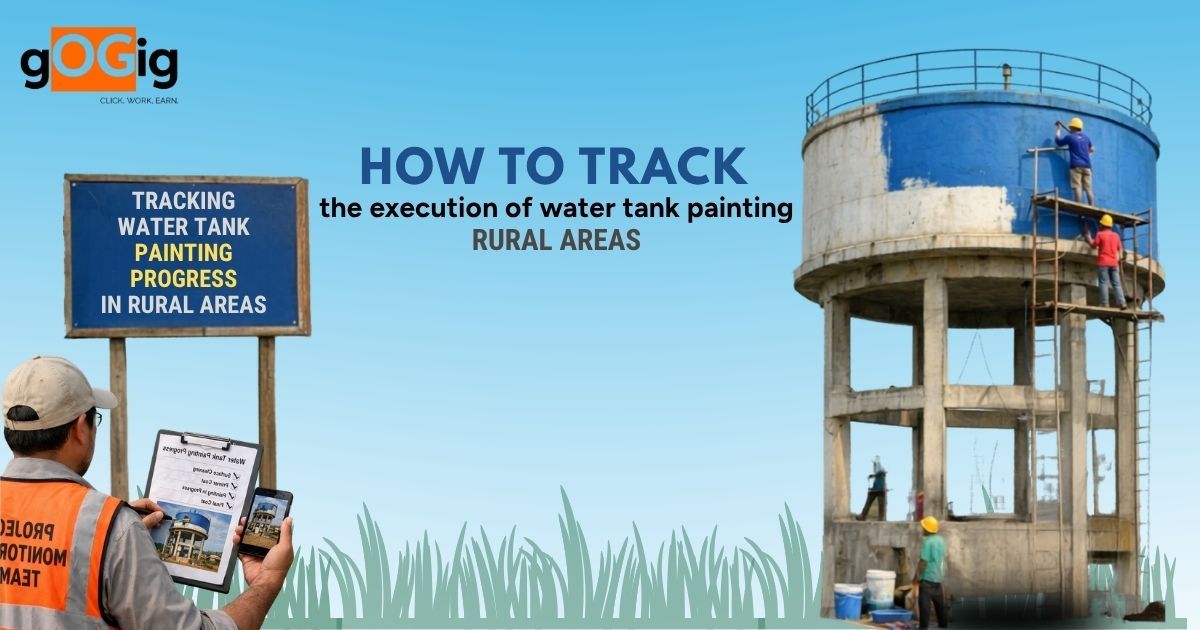
How to Track Water Tank Painting Execution in Rural Areas in Real Time
Track water tank painting campaigns in rural areas with real-time monitoring, geo-tagged proof, and better visibility to ensure accurate execution and transparency.
There is something quietly powerful about a painted water tank standing at the edge of a village. It does not need electricity. It does not compete with a newsfeed. It just sits there visible every single day to every person who walks past it. That is exactly why water tank painting remains one of the most effective methods of rural advertising in India.
But here is the part most brands overlook: getting the painting done is only half the job. The other half is knowing whether it was done correctly, at the right location, with the right branding is where campaigns quietly fall apart. Without proper water tank campaign tracking, brands are essentially trusting the process blindly. And in rural campaigns spread across dozens or hundreds of villages, blind trust is expensive.
This blog breaks down how rural campaign tracking actually works, why it matters more than most brands realize, and how a structured water tank tracking system can make the difference between a campaign that delivers and one that only looks like it does.
Why Water Tank Painting Still Works in Rural Marketing
Before getting into tracking, it helps to understand why brands still invest heavily in water tank painting campaigns in the first place. Unlike digital ads that disappear after a scroll, a painted water tank stays visible for months. Villagers walk past it on the way to the fields. Children see it on the way to school. It becomes a fixture of the local landscape and that kind of repeated, passive visibility is incredibly hard to replicate with any other medium.
Water tank painting campaigns are widely used for:
Government awareness campaigns in rural areas related to health, sanitation, education, and public safety.
Long-term brand visibility in villages for FMCG, agri-input, and telecom companies
Public communication initiatives by NGOs and state bodies
Rural product promotions that require repeated recall building
Social programs where consistent messaging over time matters more than one-time reach
Because these painted structures remain visible for long periods, the quality and accuracy of execution matter enormously. A poorly executed or unverified campaign is not just a waste of money, it is an invisible one.
The Real Challenge Is Not Execution, It Is Tracking
Most brands assume that once the campaign is assigned to a field team, the work gets done. In reality, rural campaigns involve multiple teams working across different villages simultaneously, often in areas with limited connectivity. Without proper rural campaign tracking, nobody even not the brand manager, not the agency, not the field supervisor has a clear, real-time picture of what is actually happening on the ground.
The problems that typically surface without a structured system include:
Missing locations in final reports that get discovered only after payments are made
Incorrect branding execution where colour, size, or messaging does not match guidelines
Delays in campaign completion that go unreported until a deadline is already missed
Lack of clarity between completed and pending locations across different field teams
No reliable way to measure overall campaign performance or compare location-wise progress
Verification is where most systems break down completely. Even when updates are received, there is no guarantee the painting was done correctly, at the right location, or that the submitted photo was taken that day and not reused from a previous job. Execution proof - geo-tagged, timestamped, and structured is what separates a campaign that can be verified from one that can only be assumed.
How Real-Time Water Tank Campaign Tracking Works on gOGig
gOGig is built for campaigns like these, where execution happens across many locations, field teams are non-technical, and brands need reliable documentation without adding operational complexity. Here is how it works in practice:
Create the Campaign Digitally
Brands set up the water tank painting campaign by defining villages, tank locations, timelines, and the total number of tanks to be painted. Every location is accounted for before the campaign begins - no gaps, no assumptions.
Set Execution Rules
Clear compliance rules are configured upfront: geo-tagged reporting zones, mandatory photo proof, branding visibility requirements, and quality checkpoints. This ensures that every field executor works to the same standard regardless of which village they are in.
Assign Tasks to the Right People
Campaign tasks are allocated to field executors, supervisors, and agency teams with role-based visibility. Each person knows exactly which locations they are responsible for and managers can see who is accountable for what.
WhatsApp-Based Reporting for Field Teams
This is the part that makes the biggest practical difference. Field teams do not need to learn a new app. They submit execution proof through guided WhatsApp flows - photos, geo-location, and timestamped updates directly from the village. Adoption is instant because the tool is already on their phone.
Live Dashboard for Brand Managers
While the field team is on the ground, brand managers are watching a live dashboard. Real-time campaign status, number of water tanks painted, pending locations, daily execution updates, and executor-wise performance - all visible in one place. Water tank campaign tracking becomes measurable, not just reportable.
Verified Execution Proof for Every Location
Every submission is automatically validated - geo-tag checked against the assigned location, timestamp recorded, and image logged. This creates an auditable execution record for every single village, giving brands the verified proof they need for reporting, compliance, and payment processing.
Where Tracking Becomes Most Critical
Tracking is always useful, but it becomes genuinely essential when campaigns scale. A ten-village campaign can be managed with phone calls and WhatsApp updates. A three-hundred-village campaign cannot. At that scale, manual updates are insufficient, errors compound across teams, and without a structured water tank tracking system, the entire execution picture becomes unreliable.
This is especially true for:
Government awareness campaigns spanning multiple districts with strict documentation requirements
Brand campaigns running across states with different agency partners managing different regions
Public health and sanitation programs where accountability and reporting are tied to compliance audits
Rural marketing campaigns where repeat visibility over months needs to be verified, not assumed
Real-time water tank tracking gives brands the ability to see which locations are completed, which are falling behind, and where intervention is needed — before delays become a problem rather than after.
Key Benefits of a Structured Water Tank Tracking System
When brands move from informal reporting to a proper water tank tracking system, the difference shows up across every part of the campaign:
Better visibility into completed and pending locations across all villages in real time
Improved coordination between field teams, supervisors, and brand managers
Reliable execution proof for water tank painting that eliminates guesswork and disputed claims
Organised documentation for reporting, audits, and post-campaign analysis
Faster identification of delays so corrective action can happen during the campaign, not after
Improved transparency across the entire rural campaign execution process
The cumulative effect of these benefits is a campaign that runs cleaner, finishes faster, and delivers results that can actually be measured and reported with confidence.
Frequently Asked Questions About Water Tank Campaign Tracking
How do brands track water tank painting campaigns across multiple villages?
Brands use structured rural campaign tracking platforms that combine task assignment, geo-tagged photo proof, and live dashboards. Field teams submit timestamped updates from the ground and managers track completion status for every location in real time.
Is water tank painting still effective for rural marketing in 2025?
Yes and significantly so. In areas with low internet penetration, painted structures on water tanks, walls, and community spaces continue to offer repeated passive visibility that digital channels simply cannot replicate. The medium is cost-effective and the recall impact compounds over time.
What counts as valid execution proof for a water tank painting campaign?
Valid execution proof includes a geo-tagged photograph taken at the correct location, a timestamp confirming when the work was completed, and visual confirmation that branding matches the approved guidelines. Structured platforms automate this validation rather than relying on manual review.
Can water tank campaign tracking help prevent fraudulent or duplicate photo submissions?
Yes. A proper water tank tracking system validates each submission against the assigned geo-location and timestamps the entry at the moment of upload. This makes it extremely difficult to reuse images from other locations or previous campaigns without the discrepancy being flagged automatically.
Water tank painting has earned its place in rural marketing for good reason - it works. But the execution side of these campaigns has historically been managed with informal systems that leave too much room for error, gaps, and unverified claims.
Proper water tank campaign tracking changes that. It brings the same level of accountability to rural campaigns that urban digital campaigns have always had real-time visibility, verified proof, and structured reporting that brands can actually trust.
With gOGig, rural campaign tracking is no longer a manual, error-prone process. It is a live, verifiable system that gives brands complete confidence that every painted tank represents a real, documented, compliant execution not just a line item on a report.
Because in rural advertising, what gets tracked gets doneand what gets done properly is what actually builds the brand.