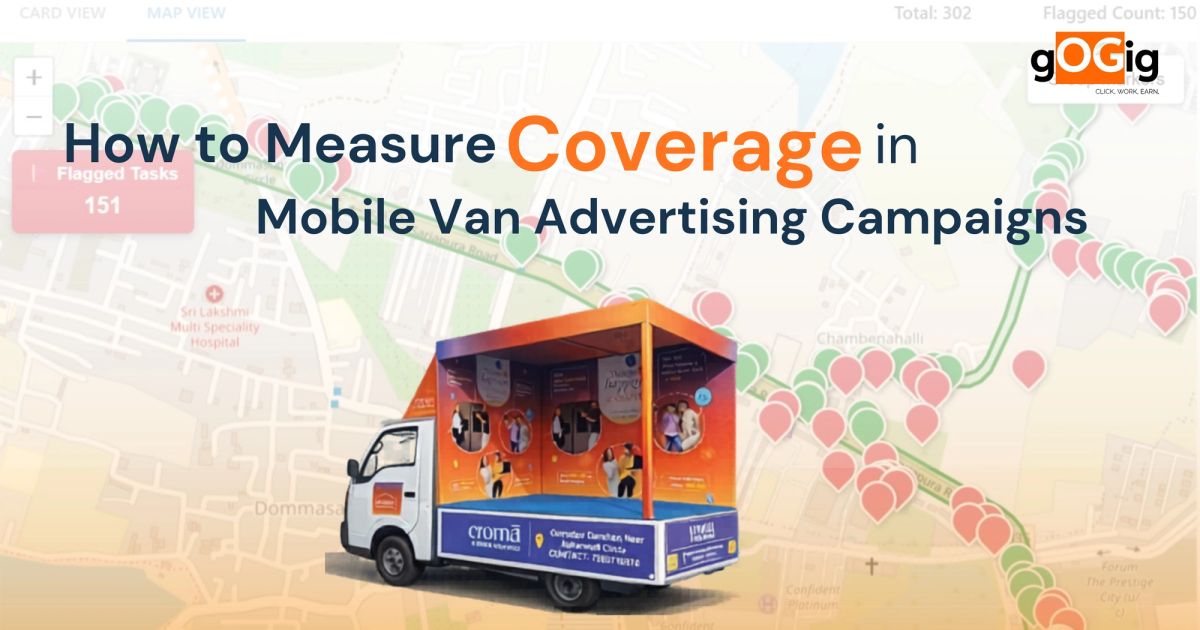
How to Measure Coverage in Mobile Van Advertising Campaigns: A Complete Guide
Measure mobile van advertising coverage with real-time GPS tracking, reach, frequency, and engagement metrics to optimize campaign performance and maximize ROI.
Let's be honest about something most vendors won't tell you.
You brief your agency, approve the creatives, sign off on routes across five or six cities, and then… wait. A week later, you get a PowerPoint with a few photos, some clip art maps, and a number that says "estimated impressions: 2.5 lakh." Nobody quite knows where that number came from. Nobody questions it either. The campaign is over. You move on.
This is the quiet, expensive problem sitting inside most mobile van advertising campaigns in India. The medium itself vans rolling through markets, residential colonies, near schools and malls is genuinely effective. It puts your brand physically in the spaces where your audience lives. But measuring whether the van actually went where it was supposed to go? That's where the whole thing falls apart.
So let's fix that.
Why Mobile Van Advertising Coverage Is So Hard to Measure
Think about what a typical mobile van campaign actually involves. You might have 10–15 vans across Mumbai, Bengaluru, and Hyderabad. Each van has a driver. The driver reports to a local vendor. The vendor reports to your agency. Your agency reports to you. That's three layers between your brief and what's actually happening on the ground.
At every layer, things go wrong quietly. A van takes a shorter route because traffic was bad. Two vans cover the same area on the same day while an entire neighbourhood never gets touched. Someone submits a photo from last week's campaign because they forgot to shoot today. None of this shows up in your final report the report that tells you the campaign was a success.
The problem isn't dishonesty (well, not always). It's that there's no real system for verification. Everyone is working on trust and WhatsApp forwards.
Key Coverage Metrics Every Mobile Van Advertising Campaign Should Track
Before we talk about how to track coverage, you need to know what you're tracking. Most brands focus on the wrong things.
Geographic reach is the foundational metric did the van actually cover the routes it was assigned? Not just the city, but the specific roads, neighbourhoods, and time windows you paid for. A van that spent three hours parked near a depot contributes nothing to your campaign, even if it technically "operated today."
Frequency by zone matters more than total reach. A van that hits the same route twice adds less value than two vans covering different zones. You want to know how many distinct localities were covered, not just how many kilometres were driven.
Time-of-day compliance is underrated. A van running through Koramangala at 11 PM reaches nobody. But a van at the same location during evening rush hour? That's peak exposure. Tracking whether your vans were in the right places at the right times separates real coverage from box-ticking.
Execution quality was the branding intact? Was the van clean? Was the audio working (if applicable)? A van with a torn flex wrap doesn't represent your brand the way you intended. You need photo evidence with timestamps, not just GPS pings.
Here's where things get interesting and where most campaign managers are still stuck in 2015.
The old system: driver takes a photo, sends it on WhatsApp in a group, someone screenshots it, puts it in a folder, creates a PPT at the end of the month. By the time you see it, the campaign is done and you can't do anything with the information.
The new system: GPS coordinates are captured with every photo. The timestamp is embedded. The location is verified against the route plan. You can see, in real time, which vans are where and if a van hasn't moved in two hours or is operating outside its assigned zone, you know before the day is over.
This shift from retrospective reporting to live visibility is the biggest unlock in outdoor campaign managementright now. It means you can intervene during the campaign, not just analyse it after.
Platforms like gOGig are built specifically for this. Field teams don't need to download a separate app they submit photos with GPS and timestamps through WhatsApp, and the platform verifies location, flags anomalies, and populates a live dashboard. Brand managers can see coverage maps in real time, catch deviations as they happen, and share verified reports with clients without waiting for someone to build a deck.
How to Set Up a Mobile Van Campaign Measurement Framework Before Day One
Most measurement problems start before the campaign even launches because nobody defined what "success" looks like in measurable terms.
Here's what you should lock in before Day 1:
Define routes precisely. Not "South Bangalore" but specific roads, colonies, and landmark zones. Each van should have an assigned route with GPS coordinates so compliance can be verified automatically.
Set time windows. If your target audience commutes between 8–10 AM and 5–8 PM, your vans should be operating in high-density zones during those windows. Build this into your plan and track against it.
Establish photo verification standards. Every van, every zone, every day. Photos must be live captures (not gallery uploads) with GPS metadata. This isn't about distrust, it's about building a campaign record you can actually use.
Build a baseline. If this isn't your first mobile van campaign, pull data from past executions. Which routes historically delivered better engagement? Which cities had the most compliance issues? Your historical data is your starting point for improvement.
There's a thing that happens in field marketing that everyone in the industry knows about and nobody puts in their reports. Photos get recycled. A driver submits the same image from a different day. Two different campaigns share the same "proof" photos. Location data gets manually edited.
This isn't hypothetical. It happens regularly, especially in large multi-city campaigns with multiple vendors.
The only real defence is tamper-proof verification live camera captures that cannot be replaced with gallery uploads, sequential photo tracking that flags duplicates, and GPS coordinates that are verified against the assigned route, not just recorded.
When you implement this kind of verification, two things happen. First, your data gets dramatically more accurate. Second, execution quality often improves just because field teams know submissions are being verified. You don't have to be adversarial about it just systematic.
How Coverage Data Improves Outdoor Advertising ROI and Vendor Accountability
Once you have reliable, real-time coverage data, the game changes.
You can reroute mid-campaign if certain zones are underperforming or oversaturated. You can compare vendor performance across cities and make informed decisions about who to work with again. You can correlate coverage with outcomes did sales inquiries go up in the localities where van frequency was highest? Did retail footfall increase in covered zones?
This is what moves mobile van advertising from a "let's see" budget line to a channel with a defensible ROI. When you can show a client or a CMO a coverage map with timestamps, compliance rates, and zone-by-zone execution data, you're having a completely different conversation than the one built on a 2.5 lakh impressions estimate that came from nowhere.
Measure Your Mobile Van Campaign Like It's Your Highest-ROI Channel, Because It Can Be
Mobile van advertising works. It's one of the few formats that literally brings your brand into someone's neighbourhood not a banner on their screen that they scroll past, but a physical presence in the street where they walk their dog or pick up groceries.
The medium isn't the problem. The measurement is.
Fix the measurement, and you fix the ROI. Start with the right metrics (geographic reach, time compliance, frequency by zone, execution quality), build your verification framework before the campaign launches, use real-time GPS tracking with tamper-proof photo verification, and treat your coverage data as a live tool not a post-campaign report.
Your van is on the road. You should know exactly where.
Frequently Asked Questions About Mobile Van Advertising Coverage
How much does mobile van advertising cost in India? Rates typically start from ₹6,000–₹10,000 per van per day, depending on the city, van type (flex wrap vs. LED), and campaign duration. Multi-city campaigns with 10+ vans are usually negotiated as packages. What most quotes don't include upfront: fabrication charges, GST at 18%, and the cost of any permits. Always ask for a fully loaded cost before comparing vendors.
How do I know if my mobile van actually covered the routes I paid for? Honestly, without GPS tracking, you don't. The traditional model drivers self-reporting via WhatsApp photos has no real verification layer. The right approach is GPS-stamped, tamper-proof photo submissions tied to a route plan, so every departure from the assigned path is flagged automatically rather than discovered (if at all) three weeks later.
How many impressions does a mobile van generate per day? Industry estimates range widely anywhere from 30,000 to 1,00,000+ impressions per day depending on city density, route, and time of day. The honest answer: impression counts in OOH advertising are estimates, not measurements. What you can actually measure with the right tools is route compliance, zone coverage, and time-slot adherence which are far more actionable than an impressions number that came from an industry average.
What is the ideal duration for a mobile van campaign? Most campaigns run between 7 and 15 days to build meaningful frequency in a target area. Shorter than 7 days and you're likely building awareness in a handful of zones without meaningful repetition. Longer than 15 days in the same area often experiences diminishing returns audiences become desensitised to the creative. For product launches or seasonal pushes, a phased approach (city A in Week 1, city B in Week 2) often delivers better recall.
What permissions are needed to run mobile van advertising in India? Requirements vary by city. Generally, you or your vendor will need clearance from the local municipal corporation or RTO (Regional Transport Office), especially for vans with audio systems or large LED screens. Some cities have specific restrictions on routes (e.g., no advertising vans on certain arterial roads during peak hours). A local vendor with established city operations will usually handle this, but it's worth confirming before the campaign goes live.
How do I prevent fake or recycled proof photos from vendors? This is more common than most agencies will admit. The safeguard is requiring live camera captures (not gallery uploads) with embedded GPS coordinates and timestamps, and using a system that cross-checks submissions against the assigned route. Sequential asset tracking where each van's submissions are linked to its vehicle ID also flags duplicates across campaigns or dates.
Can I track mobile van campaigns across multiple cities from one place? Yes, and this is where most brands are still stuck in manual mode. Managing multi-city campaigns through separate vendor WhatsApp groups, email threads, and spreadsheets creates a visibility gap that's almost impossible to close in real time. Platforms like gOGig let you manage 20+ vendors across cities from a single dashboard with live maps, compliance alerts, and instant reports without your field team needing to download anything new.
What's the ROI of mobile van advertising? ROI depends heavily on execution quality and measurement rigour. Brands that track properly route compliance, zone coverage, time-slot adherence typically see 25–40% uplifts in local footfall or inquiries during campaign periods. The brands that can't measure often can't prove ROI either way. The medium works. The measurement is what makes it provable.